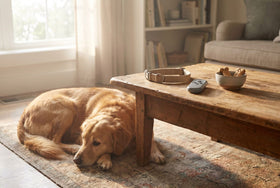



Best Toys for Puppies: How to Choose Safe, Fun Toys by What They Do

Bringing home a puppy means a lot of happy chaos, and toys are right at the heart of it. The best toys for puppies do far more than pass the time. They soothe sore teething gums, keep a busy young mind engaged, burn off energy, and turn playtime into some of the best bonding you will ever have.
The right toy in the right moment can also save your shoes, your skirting boards and your sanity. Under-stimulated puppies get bored, and bored puppies find their own entertainment, usually something you would rather they left alone.
But toys come with real responsibility. A toy that is too small, too hard, or left with an unsupervised puppy can lead to a choking scare or a dangerous gut blockage.
This guide walks you through the main types of puppy toys by what they actually do. You will learn how to choose safe ones and the simple golden rules that keep play fun for everyone.
- Choose toys too big to swallow whole or lodge in the throat, and match the toughness to your puppy's size and chewing style.
- Supervise play, check toys often, and bin any toy the moment it rips, tears or loses a squeaker, eye or piece of stuffing.
- Match the toy to the need: chew toys for teething, puzzle and lick mats for boredom, soft toys for supervised comfort, balls for energy, tug for bonding.
- Use the thumbnail test: if you cannot dent a chew with your thumbnail, it is too hard and could fracture a tooth.
- If your puppy may have swallowed part of a toy and shows vomiting, a painful belly, or goes off food, contact your vet urgently.
Why the Right Toys Matter So Much
Toys are not a luxury for puppies; they are part of raising a happy, well-adjusted dog. As Dogs Trust highlights, enrichment prevents boredom, builds confidence, and teaches skills like problem-solving and searching. When a puppy's physical and mental needs are not met, they tend to become destructive and find their own ways to stay busy.
Teething is another big reason toys matter. According to the American Kennel Club, a puppy's baby teeth start falling out at around 3 to 4 months, and adult teeth are usually in by about 6 months, so teething roughly spans 3 to 6 months. During that time gums get sore, and puppies chew more to ease the discomfort, just like a human baby. A cool chew toy can bring welcome relief to those tender gums.
Toys also build your relationship. A game of gentle tug or fetch, or a puzzle you set up together, is genuine bonding time. Get the toy box right and you cover four big needs at once: comfort, mental stimulation, energy, and connection with you.

The Best Toys for Puppies, by What They Do
| Toy type | Great for | Keep in mind |
|---|---|---|
| Rubber chew toys (teething) | Soothing sore teething gums, redirecting chewing away from furniture, satisfying the natural urge to chew | Use the thumbnail test so it is not too hard; choose a size too big to swallow; bin it the moment it is punctured or torn; supervise |
| Puzzle & treat-dispensing toys | Mental stimulation, cutting boredom and destructive chewing, slowing fast eaters | Feed part of the daily food ration through them to avoid overfeeding; supervise; raise the difficulty as skills grow |
| Soft & plush comfort toys | Gentle carrying, cuddling and light play; comfort and settling | Supervised light play only, never a tough unsupervised chew; a determined puppy can shred them and swallow the filling |
| Fetch & ball toys | Burning energy, building retrieval skills, bonding | The ball must be wider than the jaw so it cannot be swallowed or lodge in the throat; avoid standard tennis balls; supervise |
| Tug & rope toys | Bonding, impulse control, burning energy (tug does not cause aggression) | Play by the rules with gentle resistance for young pups; supervise rope play as loose strands can be swallowed |
| Snuffle & lick mats | Natural foraging and scent work; calming, settling enrichment; slowing fast eaters | Supervise so your puppy cannot chew or rip the mat; count the food toward daily calories; keep clean |
The simplest way to build a good toy box is to think about what each toy is for. Puppies enjoy chewing lots of different things, so a mix of rubber, rope and soft toys keeps them interested and covers different needs.
Chew and teething toys come first for most new puppies. Firm, textured rubber, like our Colorful Dog Chewer, satisfies the urge to chew and helps redirect it away from your furniture. For teething relief, a food-stuffable toy filled with mushy food and frozen gives a cold, soothing treat for tender gums. Always choose a chew too big to swallow, and supervise.
Puzzle and food-dispensing toys are the next essential. As Blue Cross notes, puzzle feeders, stuffable toys and treat balls make your puppy problem-solve and work for their food. That provides mental stimulation, cuts boredom, and encourages calmer behaviour.
Our Dog Treat Ball fits here nicely. It works best when you feed part of the normal daily ration through it, so it turns mealtime into a rewarding little job without meaning overfeeding. As with all food toys, keep your puppy supervised while they use it.
- Makes your puppy problem-solve and work for their food, which cuts boredom and destructive chewing
- Feed part of the normal daily ration through it so it does not mean overfeeding
- A calm, satisfying activity that supports good behaviour
For calmer, settling enrichment, spread soft puppy-safe food on a Dog Lick Mat – Slow Feeder and freeze it. The repetitive licking is naturally soothing and doubles as gentle teething relief for sore gums.
- Repetitive licking is naturally calming and helps a puppy settle
- Spread on soft puppy-safe food and freeze it for cool relief on sore teething gums
- Slows down fast eaters at mealtimes
Soft and comfort toys are for carrying, cuddling and gentle play. They are lovely for settling a puppy, but they are not built for heavy chewing. A determined puppy can shred a plush toy and swallow the filling, which is why these are for supervised light play only.
Our Stuffed Animals Shape Soft Toys are exactly this kind of comfort toy, made for gentle carrying, cuddling and light play under your eye. They are not a chew-proof toy, so keep an eye on play. Remove the toy once your puppy is drifting off to sleep, and take it away to be repaired or binned the moment it starts to come apart.
- Designed for gentle carrying, cuddling and light, supervised play
- A comforting companion that can help a puppy feel settled
- Best offered under your eye during calm moments
Fetch and ball toys burn energy and build retrieval skills. The golden rule, as PDSA advises, is size: a ball must be wider than your dog's jaw so the whole thing cannot fit in the mouth. A ball that is too small can lodge in the throat. It is also worth skipping standard tennis balls, as the abrasive coating can wear down tooth enamel over time.

Our Smart Interactive Dog Toy Ball rolls and wobbles to spark chase-and-play. Always use it supervised, in a size too big to swallow, and, as with any battery toy, keep the battery compartment securely closed.
Tug and interactive play round things out, and are wonderful for bonding. Despite the old myth, well-managed tug does not make dogs aggressive or dominant; scientific studies have debunked that. It builds impulse control and confidence, and it is fine for puppies when you play with gentle resistance and clear rules.
How to Choose Safe Toys: The Golden Rules
Choking and gut blockage is the number-one toy risk, so size comes first. A safe toy must be too big to swallow whole and too big to lodge in the throat. A handy test is to pick a toy your puppy can carry without having to hold the whole thing inside their mouth.
Next comes hardness. As Preventive Vet warns, a toy that is too hard can fracture teeth, so use the thumbnail test: press the toy with your thumbnail, and if it does not give a little, it is likely too hard. Anything soft enough to leave a slight dent is a safer bet for young teeth.
Match the toy's toughness to your individual puppy. A power chewer who tears chunks off things needs a genuinely durable toy that will not break into pieces, while a gentle nibbler can enjoy something softer. Whatever the toy, remove it once it becomes small enough to swallow or your puppy starts ripping it apart.
Only ever use toys designed for dogs. Never hand over cooked bones or sticks, which splinter and can choke, cut or block the gut. Skip children's toys and household objects too, which are not made to survive chewing and often have small parts. For any electronic or battery toy, supervise play and keep the battery compartment securely closed.
Teething, Training and Playing by the Rules
Because teething is uncomfortable, plenty of dog-safe chew toys give your puppy an appropriate outlet and teach them early to chew toys instead of shoes. If you catch your puppy chewing something they should not, do not punish them. Calmly redirect them to a safe toy and praise them for chewing the right thing.
Mouthing and play-biting is normal puppy development, so always redirect it onto a toy rather than your hands. Keep a toy in your hand during play, and if teeth make contact with skin, go still and offer the toy instead so your puppy learns that toys are more fun than fingers.

Tug is a great training game when played by the rules. Keep sessions short with just a couple of tugs, and teach a reliable 'drop' cue. Tug side to side and low to the ground rather than lifting your puppy, and feel free to let them win now and then, as that builds confidence and bond.
With rope toys, keep an eye on loose strands, as a puppy can chew off and swallow threads that then cause problems in the gut. Do skip tug, though, with any dog that is already tense or guards its things. Which brings us to a behaviour worth understanding early.
Resource Guarding and When to Call the Vet
Resource guarding, where a puppy gets tense or growly over a toy, is a natural behaviour usually driven by fear of losing something valuable. The worst thing you can do is punish it or repeatedly snatch things away, as that tends to increase anxiety and make guarding worse.
Instead, manage it: keep guarded items out of reach when you can, and swap or trade rather than grab, offering something your puppy wants in exchange. Use reward-based training, and if guarding persists, see your vet to rule out medical causes and a qualified, reward-based behaviourist for support.
It is just as important to know the urgent signs of a gut blockage after a puppy may have swallowed part of a toy. Watch for vomiting, a painful tummy (yelping when touched, or a 'prayer position' with chest down and rear up), going off food or water, changes in toileting, drooling and lethargy.
If you see any of these, or your puppy is choking, contact your vet immediately. Blockages are very serious, can be life-threatening, and often need x-rays and emergency surgery, so it is never something to 'wait and see'.
Common Puppy Toy Mistakes to Avoid
-
Avoid: Giving a toy or ball small enough to fit fully in the mouth.
Instead: Choose toys your puppy can carry without holding the whole thing in their mouth, too big to swallow and too big to lodge in the throat. For balls, pick one wider than the jaw. -
Avoid: Leaving a damaged toy in play just a bit longer.
Instead: Check toys often and bin any toy with rips, tears, punctures or loose parts straight away. Remove squeakers, stuffing, plastic eyes and bitten-off chunks before they can be swallowed. -
Avoid: Leaving a puppy alone with a plush, rope or destructible toy.
Instead: Supervise chewing and play, and only leave your puppy with toys they genuinely cannot destroy or swallow. Treat soft and plush toys as supervised comfort and light play, not unsupervised chews. -
Avoid: Picking the hardest possible chew so it lasts longer.
Instead: Do the thumbnail test. If the toy does not dent or give under your thumbnail, it is too hard and could fracture a tooth. Choose a chew with a little give. -
Avoid: Buying one toy strength for every puppy.
Instead: Match toughness to your puppy's size and chewing style: tougher for a power chewer, softer for a gentle nibbler, and remove any chew once it is small enough to swallow or being ripped apart. -
Avoid: Handing over sticks, cooked bones, kids' toys or household objects as free toys.
Instead: Only use toys designed for dogs. Never give sticks (they splinter and can impale), cooked bones (they splinter and block the gut), or anything with small parts. -
Avoid: Avoiding tug because you heard it makes dogs aggressive.
Instead: Well-managed tug is safe and great for bonding and impulse control, with studies showing no link to aggression. Tug on a toy rather than hands, keep it gentle for young pups, and teach a reliable 'drop'. -
Avoid: Waiting to see if it passes after a puppy swallows part of a toy.
Instead: Watch for vomiting, a painful or 'prayer-position' belly, going off food or water, toileting changes, drooling or lethargy, and contact your vet urgently. Blockages can be fatal and may need surgery.
Happy, Safe Play Starts With the Right Toys
Choosing the best toys for puppies really comes down to matching the toy to the need. That means something to chew for teething, a puzzle or lick mat for a busy mind, a soft toy for supervised comfort, a ball for energy, and gentle tug for bonding. Get that mix right and you cover almost everything a growing puppy needs.
Keep the golden rules close: size it too big to swallow, do the thumbnail test, supervise play, bin damaged toys straight away, and rotate the toy box to keep it exciting. None of it is complicated, and it quickly becomes second nature.
Most of all, enjoy it. Play is where so much of the fun and the friendship happens in those early months, and a little care makes sure every game stays as safe as it is joyful.
Keep reading
- Safe Puppy Chews — pick chews that soothe teething without cracking young teeth.
- Puppy Essentials Checklist — everything to have ready before your puppy comes home.
- How to Train a Puppy at Home — build good habits and redirect biting onto toys.
Frequently Asked Questions
What are the best toys for a teething puppy?
Firm rubber chew toys are ideal for teething, especially textured ones that massage sore gums. Cold helps too, so a food-stuffable toy filled with mushy food and frozen, a chilled rubber teething toy, an ice cube or a frozen wet washcloth all give soothing relief. A frozen lick mat works well for the same reason. Always pick a size too big to swallow and supervise.
How do I know if a toy is too small or too hard for my puppy?
For size, choose a toy your puppy can carry without holding the whole thing inside their mouth; it should be too big to swallow whole or lodge in the throat. For hardness, use the thumbnail test: press it with your thumbnail, and if it does not give a little it is too hard and could fracture a tooth.
Are rope and tug toys safe for puppies?
Tug is a great, safe bonding game when played by the rules, and it does not make dogs aggressive despite the old myth. Keep sessions short with gentle resistance for young pups, teach a 'drop' cue, and tug low and side to side. Supervise rope play closely, as loose strands can be swallowed.
How often should I replace my puppy's toys?
There is no set schedule; inspect toys regularly and bin any toy the moment you see rips, tears, deep punctures or loose parts like squeakers, eyes or stuffing. Remove chews once they get small enough to swallow. Separately, rotate the toys you keep every few days to keep them interesting.
Can I leave my puppy alone with a toy?
Only ever leave your puppy alone with toys you are completely sure they cannot destroy or swallow. Soft, plush and rope toys, and anything a puppy can pull apart, are for supervised play only. When you cannot watch, put those toys away and offer only tough, appropriate options.
How many toys does a puppy actually need?
You do not need a mountain of toys; a small, varied set covering the main needs works best: something to chew, a puzzle or lick mat, a comfort toy and a ball or tug toy. Rotating a handful in and out every few days keeps them feeling new far better than leaving everything out at once.

We're a team of dog lovers who know the joy (and the chewed slippers) of a playful new puppy. For this guide we cross-checked our advice against American Kennel Club, PDSA, Dogs Trust, Preventive Vet and Blue Cross so the toy tips you follow are grounded in trusted sources, not guesswork. Every puppy is different, so your vet is always the right call for health questions - and straight away if your puppy may have swallowed part of a toy.