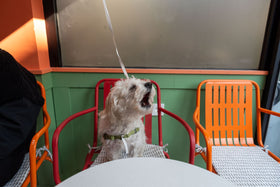



How to Help a Dog With Separation Anxiety: A Calm, Step-by-Step Plan

Coming home to a chewed doorframe, a puddle on the floor, or a note from an unhappy neighbour about the howling is heartbreaking. It is easy to feel frustrated, guilty, or convinced your dog is misbehaving on purpose. Please take a breath, because none of that is what is really happening.
Learning how to help a dog with separation anxiety starts with one reassuring truth: a dog in this state is not being naughty or spiteful. They are genuinely panicking. The American Kennel Club describes true separation anxiety as extreme stress that lasts from the moment you leave until you return, closer to a panic attack than an act of defiance.
The good news is that dogs can and do learn to feel safe alone. It takes patience and a gentle, gradual plan rather than a quick fix. This guide walks you through what separation anxiety really is and how to tell it apart from simple boredom. It also covers the mistakes that make it worse, and a calm step-by-step approach you can start this week.
- Separation anxiety is genuine panic and distress when a dog is left alone, not disobedience, spite, or a house-training failure. Your dog is not being naughty and this is not your fault.
- The evidence-based fix is gradual desensitisation: building up alone time in tiny steps while your dog stays calm and under their panic threshold. This usually takes weeks to months, supported by honest comfort aids like a lick mat or a comfy safe space.
- Punishment, scolding, 'crying it out' (flooding), anti-bark or shock collars, and forcing a crate on a dog who hates it all make anxiety worse. Avoid them completely.
- Film your dog when you are out. The RSPCA notes around half of affected dogs show no signs while you are home, so a phone or pet camera is the single best way to see what is really going on.
- See your vet first to rule out medical causes. For moderate to severe cases, work with a qualified behaviourist, and for some dogs vet-prescribed medication can help alongside training.
What Separation Anxiety Really Is (And What It's Not)
Separation anxiety is a real distress response. As the ASPCA puts it plainly, anxious behaviours are not the result of disobedience or spite. They are distress responses that happen because the dog is genuinely upset at being separated from their person.
This is the single most important thing to understand. When a house-trained dog only soils the floor or destroys the door while you are out, that points to anxiety, not a training gap. The behaviours almost always happen only when the dog is alone, and they stop the moment you walk back in.
It is also more common than many owners realise. If your dog struggles with this, you are far from alone, and it is a well-understood condition with a clear, gentle path forward.
The Signs to Look For
Some signs are obvious. Others are quiet and easy to miss, which is exactly why so many cases go unrecognised for a long time.

The more visible signs include barking, whining or howling when alone, and destructive chewing or digging, often around doors and windows. You may also see indoor accidents from a dog who is normally clean, along with drooling, panting, or desperate attempts to escape confinement. In their frantic efforts to get out, some dogs injure themselves, breaking teeth or scraping their paws.
Quieter signs matter just as much. The PDSA notes that some anxious dogs simply shut down, appearing low, depressed and doing nothing at all. So a calm, tidy home does not always mean a calm dog. Pacing, trembling, refusing food, and getting agitated the moment you pick up your keys are all worth taking seriously.
The RSPCA notes that roughly half of affected dogs show no signs while you are home. That is why both it and the AKC recommend the same simple step: film your dog after you leave. Set up a phone or pet camera and record what your dog actually does once the door closes. It is the clearest window into how they really feel.
Is It Really Separation Anxiety, Or Just Boredom?
This is where many owners go wrong, and it genuinely matters, because the two problems need very different solutions. Boredom usually eases with more exercise and enrichment. True separation anxiety is panic, and no amount of toys alone will fix it.
Blue Cross draws a helpful line between the two. A bored dog is often young, energetic and simply under-exercised, entertaining itself by chewing a table leg or raiding the bin when left too long. An anxious dog becomes distressed the instant you leave, showing real fear signs such as a raised heart rate, panting and salivating.
| What you see | True separation anxiety | Boredom or under-stimulation |
|---|---|---|
| When it happens | Starts the moment you leave (or even as you get ready), with the first 15 minutes or so usually the worst | Starts later, often after the dog has settled or slept, out of restlessness |
| The dog's state | Genuine panic: pacing, trembling, drooling, howling, desperate to escape | Not panicked; the dog looks under-occupied rather than distressed |
| What gets damaged | Focused on exits: doors, windows and doorframes, in attempts to reach you | Random items: chair legs, cushions, rubbish bins, whatever is fun to chew |
| Does more exercise help? | Helps a little but does not fix it; enrichment alone will not stop the panic | Usually improves a lot with more walks, play and mental stimulation |
| Does it happen when you're home? | Rarely; the behaviour is tied specifically to being alone or separated | Can happen any time the dog is bored, whether you are home or not |
Use the table above as a quick gut-check. Ask yourself: does it start right away or later? Does the damage target the door or random objects? Does your dog look panicked or just under-occupied? And crucially, does more exercise and mental stimulation actually help?
If it does, you are likely dealing with boredom. If your dog is in a genuine state of panic that enrichment does not touch, lean towards separation anxiety and plan accordingly.
Why Punishment and Quick Fixes Make It Worse
When you come home to damage, the instinct to tell your dog off is completely understandable. But punishment does not work here, and it actively deepens the problem.
The RSPCA explains why: a dog cannot connect a telling-off now with something it did an hour ago. All the scolding does is make your return feel threatening, so the dog becomes more anxious the next time it is left. The ASPCA and AKC are equally direct, warning that punishing accidents only adds to the anxiety and makes everything worse.
Forcing a dog to simply endure long absences, sometimes called flooding or 'letting them cry it out', is just as damaging. Preventive Vet notes it overwhelms the dog's ability to cope, intensifies the panic and can make the fear spread. Every panic episode floods the body with stress hormones and sets progress back.
Anti-bark, shock, spray and ultrasonic collars deserve a special mention: please never use them for this. The barking and howling are symptoms of panic, not the problem itself. Suppressing them with something unpleasant does nothing for the underlying fear and tends to make an already frightened dog more anxious. The goal is to resolve the panic, never to silence its symptoms.

How to Help a Dog With Separation Anxiety, Step by Step
Here is the heart of the plan. It rests on one principle: your dog should never be pushed past the point where they panic. Progress is measured in small, calm wins, sometimes just a few seconds at a time.

Step 1: See your vet first. Blue Cross and the ASPCA both stress that pain and medical issues, from urinary infections to other conditions, can cause or mimic these signs. Your vet can rule those out and advise on next steps.
Step 2: Build gentle independence while you are home. The AKC suggests teaching a solid 'stay' and letting your dog settle in another room for short spells while you are still in the house, so being a little apart from you feels normal and safe.
Step 3: Defuse your departure cues. Picking up keys, putting on shoes or grabbing a coat can trigger anxiety before you have even left. The ASPCA and AKC recommend doing these things repeatedly without leaving, then going to make dinner instead, until the cues stop predicting your absence.
Step 4: Start micro-absences. Once your dog is relaxed, begin with departures of just one to two seconds, as the ASPCA advises, then return calmly. You are teaching your dog that you always come back.
Step 5: Build up gradually, always under threshold. Slowly increase the time, watching your dog closely. If they show any distress, you have gone too far too fast; drop back to an easier step. How quickly you progress depends entirely on your individual dog.
Step 6: Don't exceed their current limit in real life. During training, avoid leaving your dog alone for longer than they can handle. Bridge the gap with a sitter, daycare, a friend or family member, or working from home. Every avoided panic episode protects your progress.
Everyday Things That Help
Alongside the training, small daily habits make being alone far easier for an anxious dog.
Keep departures and arrivals low-key. The ASPCA and AKC both advise a quiet goodbye and, on your return, greeting your dog calmly and waiting until they settle before making a fuss. Big emotional comings and goings only crank up the tension.
Exercise and enrichment help too. A dog that has had a good walk, a sniff about and some playtime is more likely to settle. Exercise will not cure separation anxiety, but a tired, contented dog copes better with alone time.
Food-based enrichment can be a gentle departure distraction. Reserving a special, long-lasting food treat only for when you leave helps some dogs start to associate your departure with something good. A loaded, frozen lick mat given right as you head out is a lovely way to do this.

Be honest with yourself, though: this suits milder cases, and a dog mid-panic often will not eat at all. Treats buy calm for a few minutes; they do not treat the fear.
Finally, give your dog a comfortable safe space. A cosy bed in a quiet room, sometimes with a recently worn item of your clothing tucked in, can boost their sense of security. A crate should only ever be a safe space if your dog already genuinely loves it; if not, a comfortable room behind a stair gate is far kinder, since your dog can still see, hear and smell around the home.
- Spreadable, freezable surface that turns soft food into a longer-lasting activity
- A calm, food-based distraction to offer at the moment you leave
- Best suited to milder cases; a dog in full panic often won't eat
- Easy to rinse and reuse, and simple to slip into a daily routine
- A soft, supportive resting place your dog can call their own
- Helps mark out a calm, predictable safe space in a quiet room
- Works well paired with a stair gate rather than a closed door or crate
- A cosy anchor for the settled alone-time setup you are building
A Realistic Timeline (Be Patient With Your Dog, and Yourself)
It is worth saying clearly: this is not a weekend project. Preventive Vet is upfront that treating separation anxiety takes weeks to months of steady, consistent work.
Progress is rarely a straight line. Some days will feel like a leap forward, others like a step back, and that is completely normal. You are adding seconds, then minutes, to your dog's tolerance, guided by how they cope rather than by a fixed schedule.
Try to measure success in tiny wins rather than the finish line. Every calm departure, every relaxed few minutes, is real progress. Be as patient and kind with yourself as you are being with your dog; you are both learning something genuinely hard, and you are doing it together.
When to Get Professional Help
You do not have to figure this out alone, and for many dogs you should not try to. Separation anxiety is a complex condition, and expert guidance often makes the difference.

Always start with your vet. They will rule out medical causes and can advise whether the problem is mild enough to tackle at home or serious enough to need more support.
For moderate to severe cases, a vet can refer you to a qualified, accredited behaviourist, such as an ABTC-certified behaviourist in the UK or a Certified Applied or veterinary behaviorist in the US.
For some dogs, vet-prescribed medication is a valuable part of treatment. The PDSA notes that medication is often needed alongside behavioural therapy and can usually be stopped once the dog has learned to cope on its own. In practice it can calm a very stressed dog enough for the training to work; it is used alongside behaviour work, not instead of it. This is always a decision for your vet, so please never medicate your dog yourself.
Common Mistakes to Avoid (and What to Do Instead)
-
Avoid: Punishing or scolding your dog for mess, barking, or damage when you get home.
Instead: Never punish it. Your dog cannot link a telling-off to something it did earlier, and punishment only makes your return feel threatening, deepening the anxiety. Clean up calmly and focus on the plan. -
Avoid: Making a big, emotional fuss when you leave and when you come back.
Instead: Keep departures and arrivals low-key. A quiet goodbye and a calm hello, waiting for your dog to settle before greeting them, keeps the emotional temperature down. -
Avoid: Leaving your dog to 'cry it out' or endure long absences to toughen them up (flooding).
Instead: Work gradually and always stay under your dog's panic threshold. Forcing them to endure fear overwhelms them and makes the anxiety worse, not better. -
Avoid: Shutting an anxious dog in a crate they are not already happy in.
Instead: Only use a crate if your dog already loves it as a safe space. Otherwise, confine them to a comfortable room behind a stair gate, where they can still see and hear around the home. -
Avoid: Expecting a fast fix and giving up when progress feels slow.
Instead: Reframe it as weeks to months of gentle, steady work, measured in seconds added at a time. Slow progress is normal progress, not failure. -
Avoid: Trying to handle a severe case entirely alone, without a vet or behaviourist.
Instead: See your vet first to rule out medical causes, then get a referral to a qualified behaviourist for moderate to severe cases. Professional guidance keeps the plan safe and effective.
Small, Steady Steps Toward a Calmer Dog
If you take one thing from this guide, let it be this: your dog is not being naughty, and this is not your fault. Separation anxiety is genuine panic, and it responds beautifully to patience, kindness and a gradual plan rather than pressure or quick fixes.
Learning how to help a dog with separation anxiety is really about teaching your dog, second by second, that being alone is safe and that you always come back. Start with a vet visit, build independence gently, defuse those departure cues, and grow alone time in tiny, calm steps. Lean on comfort aids like a lick mat or a cosy safe space where they genuinely help, and reach for professional support whenever you need it.
Progress may be slow, and some days will feel like two steps back. That is normal. Keep going gently, celebrate the small wins, and be kind to yourself along the way. With time and consistency, your dog really can learn to feel calm and secure on their own, and you will both breathe a little easier.
Keep reading
- Slow Feeder Dog Mat — how a slow feeder calms mealtimes and eases anxious eaters.
- How to Take Care of a Puppy — a gentle first-weeks guide to a calm, settled puppy.
- Dog Grooming Supplies — the at-home grooming essentials worth owning for a calm routine.
Frequently Asked Questions
Will my dog just grow out of separation anxiety?
It's unlikely to fix itself, and left alone it often gets worse as each panic episode reinforces the fear. The reassuring news is that with a gradual desensitisation plan, most dogs can learn to feel safe alone. Starting sooner, and getting your vet's input, gives the best results.
Should I get a second dog to keep my anxious dog company?
It's tempting, but don't rely on it as a fix. An anxious dog is usually seeking its specific person, not just any dog, so a companion often doesn't ease the panic. A new dog can even learn the anxious behaviour, so it's better to work on the underlying issue first.
Can I use a bark collar to stop the howling when I'm out?
No, please don't. The howling and barking are symptoms of panic, not the real problem. Anti-bark and shock collars punish a frightened dog for showing distress, which leaves the fear untreated and usually makes anxiety worse. The goal is to resolve the panic, not silence it.
How long does it take to help a dog with separation anxiety?
Realistically, weeks to months of consistent, gentle work, paced to your individual dog. You build up alone time in small increments, sometimes just seconds at a time. Progress isn't always linear, and that's completely normal, so patience matters more than speed.
Will a lick mat or food puzzle cure my dog's separation anxiety?
No single product can cure it. Enrichment like a lick mat or treat ball can be a helpful departure-time distraction and works best for milder cases, but a dog in genuine panic often won't eat at all. Think of these as comfort aids that support a plan, never a replacement for gradual training.
Should I see my vet or a behaviourist first?
See your vet first. They can rule out medical causes, such as pain, that might be driving the behaviour, and advise on next steps. For moderate to severe cases, your vet can refer you to a qualified, accredited behaviourist, and for some dogs may discuss whether prescribed medication could help alongside training.

We're a team of dog lovers who believe a calm, secure dog is a happy one. For this guide we cross-checked our advice against ASPCA, AKC, RSPCA, PDSA, Blue Cross and Preventive Vet so the welfare and behaviour guidance you follow is grounded in trusted veterinary and welfare sources, not guesswork. None of this replaces your own vet, who should always be your first call.