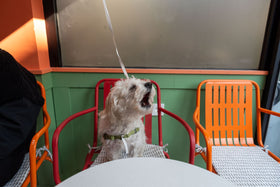



How to Train a Puppy at Home: Your First Few Weeks, Made Simple

Bringing home a new puppy is joyful and exciting — and, let's be honest, a little overwhelming. If you're wondering how to train a puppy at home without harsh methods or confusing jargon, take a deep breath. You're already doing the most important thing by looking for a kind, gentle approach.
Here's the reassuring truth to hold onto throughout. Your puppy is a baby, learning about a brand-new world one small step at a time. When they have an accident or chew your shoe, they aren't being naughty or trying to test you — they simply don't know the rules yet.
This guide walks you through a warm, reward-based plan you can start today: how puppies actually learn, house training, crate and settle time, safe socialisation, the core cues, and how to handle mouthing and chewing. The whole method is simple — reward what you want, calmly redirect what you don't, and be patient. You've got this.
- Puppy training is reward-based: mark and reward the behaviour you want, and calmly redirect what you don't — never punish, shout or use force.
- You can start the day your puppy arrives, with most guidance suggesting around 8 weeks. Keep sessions to roughly 5-10 minutes, a few times a day, and always end on a win.
- Accidents, mouthing and chewing are normal developmental stages, not defiance — supervise closely, redirect gently, and stay patient.
- Socialise in the key window (roughly 3 to 16 weeks) but do it safely around vaccinations — carry your pup, use vaccinated playmates, and ask your vet how and when.
- Consistency and support matter most: everyone uses the same cue words and rules, and a force-free puppy class, your vet and a qualified reward-based trainer are there to help.
How to Train a Puppy at Home: When to Start
You can begin gentle training the very day your puppy comes home, with most guidance suggesting around 8 weeks old. There's no need to wait — simple things like responding to their name and earning praise are training too, and it all continues naturally through adolescence and beyond.
The whole approach is reward-based, also called positive reinforcement. When your puppy does something you like, you give them something they love — a treat, praise or a game — which makes them far more likely to do it again. The RSPCA and PDSA both recommend this reward-based method because it's kind, effective and builds a trusting relationship.

Small, tasty rewards work best. Keep a stash of soft treats like tiny pieces of chicken, cheese or ham for tricky moments, and use everyday kibble or praise for easy practice. Timing matters most. Reward during or within about half a second of the behaviour, so your puppy connects the two.
If you like, you can add an optional marker — a clicker or a short word like 'Yes!' said the instant your puppy gets it right, always followed by a reward. It's a lovely way to tell your pup 'that's exactly it,' but it's completely optional.
| Puppy Age | What to Focus On |
|---|---|
| 8-10 weeks (settling in) | Name recognition, gentle handling, positive crate introduction, starting a toilet routine, and lots of reward for calm behaviour. |
| 10-12 weeks | Safe socialisation in the key window (around vaccinations — ask your vet), first easy cues like sit, and short fun sessions. |
| 3-4 months | Continued house training, luring sit/down/come, building bite inhibition, and gentle intro to the lead and loose-lead walking. |
| 4-6 months | Polishing recall, stay/wait and leave it, practising cues with mild distractions, and steady, patient repetition. |
Set Realistic Expectations (the Reassuring Bit)
Here's something that takes the pressure off. Puppies have very short attention spans and tire easily, much like small children. They also sleep an enormous amount — often 18 to 20 hours a day — and that sleep is essential for healthy growth and a settled temperament.
Learning takes weeks to months and lots of gentle repetition, so try not to expect too much too soon. Some things will click quickly; others will take dozens of happy little practice sessions.
Most importantly, accidents, mouthing and chewing are normal developmental stages, not defiance. Your puppy isn't being bad on purpose — they're simply being a puppy. Keeping that in mind makes the whole journey calmer for both of you.
Keep Sessions Short, Fun and Positive
The simplest way to train a puppy at home is little and often. Aim for sessions of about 5-10 minutes (even just a couple of minutes for a very young pup), repeated a few times through the day. Short and upbeat beats long and draining every time.

Always try to end on a win. If your puppy is struggling with something new, finish with an easy cue they already know and a big reward, so training ends on a happy note.
Never force your puppy into a position or push through frustration. If something isn't working, pause on a good moment and try again later. Training should feel like a fun game you play together, not a test.
House and Toilet Training, the Kind Way
Toilet training runs on four simple things: routine, supervision, rewarding outside, and calmly cleaning up any accidents. As a rough rule of thumb, a puppy can hold their bladder for roughly their age in months plus one, in hours — so a 3-month-old can comfortably hold it for only about four hours at most. Take them out at least that often, and much more frequently in practice.
Take your puppy out at every key moment: first thing, after every meal (usually within about 5-30 minutes), after drinking, after each nap, and during and after play. Go last thing at night too, and roughly every couple of hours through the day. Watch for pre-toilet signs like sniffing and circling.
The moment your puppy goes in the right place, reward them right there with praise and a treat — don't wait until you're back indoors. A quiet cue word like 'be quick' as they go can help too.
If an accident happens indoors, stay calm and clean it thoroughly with an enzyme cleaner, which removes the scent that would otherwise draw your puppy back. Never punish or tell off for an accident — it only teaches your puppy that going in front of you is scary, which makes training harder.
Crate and Settle — Building Calm Alone-Time
A crate or pen, introduced gently, gives your puppy a safe little den to rest in — and helps you keep them safe when you can't supervise. The golden rule: it must always be a positive place, never used as punishment.
Start with the door open. Toss treats progressively closer and then inside, feed meals in there, and offer a stuffed activity feeder or lick mat so your puppy builds a happy association. Only close the door once they're comfortable, and build up alone-time in small steps — beside the closed crate first, then briefly out of sight, then a little longer.

Go at your puppy's pace. If they pant, bark a lot or seem distressed, you're moving too fast — simply back up a step. And keep confinement short: a young puppy can't hold their bladder long, so the crate is for rest and settling, not all-day confinement.
This is also where a comfortable, consistent resting spot really helps a puppy learn to switch off and get the deep sleep they need.
- Calming, food-based enrichment that helps a puppy relax and settle
- Great for building a positive crate or alone-time association
- Redirects teething chewing onto something appropriate
- Silicone slow-feeder design
Socialisation in the Key Window (Done Safely)
Socialisation means gently, positively introducing your puppy to the everyday sights, sounds, people, handling and safe animals they'll meet in life. As Blue Cross explains, there's a key window for this — roughly 3 to about 16 weeks — when positive experiences shape a confident, relaxed adult.
Keep it low-pressure and reward-based: introduce just one or two new things at a time, pair them with treats and praise, and always let your puppy choose whether to approach or hang back. Never force a frightened puppy — if they're worried, calmly move away and try again another day.

Gentle handling helps too. Regularly and calmly touch your puppy's ears, paws, mouth and tail paired with rewards, so vet visits and grooming feel normal later on.
Because this window often falls before your puppy is fully vaccinated, safety matters. You can carry your pup to experience the world without touching the ground, invite calm fully-vaccinated dogs to your home, and use a reward-based puppy class that requires vaccination. Always ask your vet how and when to socialise safely — the timing depends on the vaccine and local risk.
Teaching the Core Cues
Once your puppy is happily earning rewards, you can start the everyday cues the AKC recommends every dog learns. Begin with their name — say it, and reward the instant they look at you. That simple 'check in with me' habit underpins everything else.
Sit: hold a treat at your puppy's nose and slowly lift it up and back. As their head follows, their bottom lowers — reward the moment it touches the floor.
Down: lower a treat from the nose straight to the floor and reward when their elbows settle. Never push your puppy into position; let them choose it, and add the word only once they're offering the movement.
Come (recall): make coming to you the best thing ever. Call their name and 'come,' then reward big with treats, praise or a game every single time. Never grab or loom over them as they arrive, or you'll make recall less appealing.
Stay/wait: teach a release word like 'OK,' reward for staying put, and build up the pause and distance in tiny steps.
Leave it: hold a treat in a closed fist, and the moment your puppy gives up and pulls away, reward them from your other hand with something even better.
Loose-lead walking: simply reward your puppy for being near you on a slack lead — a gentle way to build good habits as they grow.
Mouthing, Nipping and Chewing
Puppies explore the world with their mouths, and they chew even more while teething — so mouthing and nipping are completely normal, not a sign of aggression, as the ASPCA reassures owners. The goal isn't to stop it overnight but to teach your puppy to be gentle and to chew the right things.
The instant those little teeth touch your skin, redirect onto a chew toy. Keep a variety handy, along with teething chews, and puppy-proof your home so tempting items are out of reach.

If a nip really hurts, give a short high-pitched yelp and let your hand go limp, or calmly pause play and step away for 30-60 seconds. Your puppy learns that teeth-on-skin ends the fun, then you can resume gently. Never smack, hit, scruff-shake or hold the muzzle — it can make biting worse and cause fear or even real aggression.
A lick mat or treat-dispensing toy can be a big help here, giving teething mouths and busy brains an allowed outlet.
- Food-dispensing puzzle for mental stimulation
- Encourages calm, independent play
- Helps burn a puppy's energy in a gentle way
- Enrichment only
When to Get Help
You can teach the basics beautifully at home, but you never have to go it alone — and reaching out early is a sign of a great owner, not a failing one.
A good, reward-based (force-free) puppy class is wonderful for both socialisation and support, letting your puppy learn around other vaccinated pups in a calm setting. Look for classes that set puppies up to succeed and reward good behaviour.
Your vet is a key ally too — for health, vaccination and safe-socialisation advice, and to rule out any medical cause behind issues like ongoing toilet-training trouble. And if you're finding a particular behaviour hard, or your puppy seems very fearful, a qualified reward-based trainer or behaviourist can help you turn things around gently.
Common Puppy Training Mistakes to Avoid
-
Avoid: Telling your puppy off for a toilet accident — or worse, rubbing their nose in it or scolding after the fact.
Instead: Never punish accidents. They simply mean the puppy needed to go out sooner. Take them out more often, reward heavily the instant they go outside, and clean any indoor mess calmly with an enzyme cleaner so the scent doesn't invite a repeat. -
Avoid: Only rewarding once the puppy comes back indoors after toileting outside.
Instead: Reward on the spot, the moment they finish outside, so they clearly connect toileting-in-the-right-place with the good thing. Waiting until you're back inside muddles the message. -
Avoid: Making training sessions too long, so your puppy loses focus and it stops being fun.
Instead: Keep sessions to about 5-10 minutes (even shorter for a very young pup), keep them upbeat, and always finish on an easy win. A few short sessions a day beat one long one. -
Avoid: Using the crate or pen as a 'time-out' punishment, or shutting the puppy in for too long.
Instead: Make the crate a positive den with treats, meals and a lick mat — never somewhere they're sent in trouble. Build up time gradually and keep any confinement short, especially for a young puppy who can't hold their bladder long. -
Avoid: Physically pushing the puppy into position — pressing their bottom down for 'sit' or forcing them into a 'down'.
Instead: Lure with a treat and let the puppy choose to move into the position. Forcing them is confusing and can feel intimidating, which makes learning slower, not faster. -
Avoid: Shouting at, smacking or grabbing the muzzle of a puppy that's mouthing or nipping.
Instead: Redirect onto a chew toy, and pause play calmly (a little yelp or a short time-out) if teeth hurt. Never smack, scruff or hold the muzzle — it can actually make biting worse and cause fear or aggression. -
Avoid: Falling for 'dominance' or 'alpha' myths and trying to show the puppy 'who's boss'.
Instead: Your puppy isn't plotting to rule the house — they're a baby learning. Reward-based training builds trust and confidence; the pack-leader idea is outdated and can frighten a puppy and damage your bond. -
Avoid: Being inconsistent — different people in the home use different words, or you reward jumping up one day and scold it the next.
Instead: Agree on one set of cue words and house rules that everyone uses. Consistency is the kindest thing you can give a puppy; mixed signals leave them confused and anxious.
You've Got This — Be Patient, Be Kind
Learning how to train a puppy at home really comes down to one simple, kind idea. Reward the things you love, calmly redirect the things you don't, and give it time. Your puppy isn't being naughty when they have an accident or grab your sleeve — they're a baby figuring the world out, one repetition at a time.
Keep sessions short and happy, celebrate the small wins, and lean on your vet and a good force-free puppy class whenever you need a hand. Progress rarely runs in a straight line, and that's completely normal.
Above all, enjoy this stage. These early weeks are how you build a calm, confident, trusting companion for years to come. A little patience now pays back a lifetime of love — you've got this.
Keep reading
- How to Care for a Puppy — the wider first-weeks routine of feeding, sleep and settling in.
- How to Help a Dog With Separation Anxiety — build calm, confident alone-time as your puppy grows.
- How to Train a Reactive Dog — gentle, reward-based help if barking or lunging appears later.
Frequently Asked Questions
When should I start training my puppy at home?
You can start gentle, reward-based training the day your puppy comes home, with most guidance suggesting around 8 weeks old. Begin with easy, positive things — getting used to a collar, responding to their name, and earning treats for calm behaviour. Training then continues naturally through adolescence and into adulthood, so there's no rush and no hard deadline.
Is it okay to use treats for training, or will my puppy only obey for food?
Treats are one of the best tools you have — dogs repeat what they find rewarding, so small, tasty rewards help your puppy learn fast. Use high-value treats (tiny pieces of chicken, cheese or ham) for harder tasks and everyday kibble or praise for easy ones. As a behaviour becomes reliable, you gradually reward less often and mix in praise, play and life rewards, so you won't need a treat forever.
How long does it take to toilet train a puppy?
Every puppy is different, but with a consistent routine, close supervision and rewarding outside, many puppies become fairly reliable by around 6 months — though individual variation is large. Expect accidents along the way, as even quick learners have them. Take your puppy out first thing, after meals, naps and play, and roughly every couple of hours, and never punish accidents. If toilet training stalls, it's worth asking your vet to rule out any health cause.
Can I socialise my puppy before they're fully vaccinated?
Yes, and you should — the key socialisation window is short, roughly 3 to 16 weeks. But it must be done safely: you can carry your puppy to see and hear the world without them touching the ground, invite calm fully-vaccinated dogs to your home, and use a reward-based puppy class that requires vaccination. Always ask your vet how and when to socialise safely for your specific puppy, as timing depends on the vaccine and local disease risk.
My puppy keeps biting my hands — how do I stop it?
Mouthing and nipping are completely normal, especially during teething. The moment those teeth touch skin, redirect onto a chew toy; if it hurts, give a little yelp or calmly pause play for 30-60 seconds so your puppy learns teeth-on-skin ends the fun. Keep plenty of toys and teething chews handy, and never smack or hold the muzzle — that can make biting worse.
Do I need a professional trainer, or can I do it all at home?
You can teach the basics at home with kindness and patience. That said, a good force-free puppy class is fantastic for socialisation and support, and there's no shame in getting help. If your puppy seems very fearful, you're struggling with a particular issue, or something feels off, reach out to your vet or a qualified reward-based trainer or behaviourist — earlier is always easier.

We're a team of dog lovers who believe kind, reward-based training builds the happiest puppies. For this guide we cross-checked our advice against AKC, RSPCA, PDSA, Blue Cross and ASPCA so the training and welfare guidance you follow is grounded in trusted, force-free sources, not guesswork. Your own vet and a good puppy class are always your best first ports of call.